
Mount Damavand, often referred to as the “Roof of Iran,” is not merely a geographic landmark; it is the beating heart of the Persian identity. Standing at an impressive 5,671 meters (18,606 feet), it holds the title of the highest peak in Iran and the Middle East, as well as the highest volcano in all of Asia. As the author of the definitive resource at mountdamavand.com, I have spent decades documenting this “White Giant.” In this article, I will take you on a journey through its geological wonders, its mythical shadows, and the practical realities of standing atop Asia’s greatest volcano.
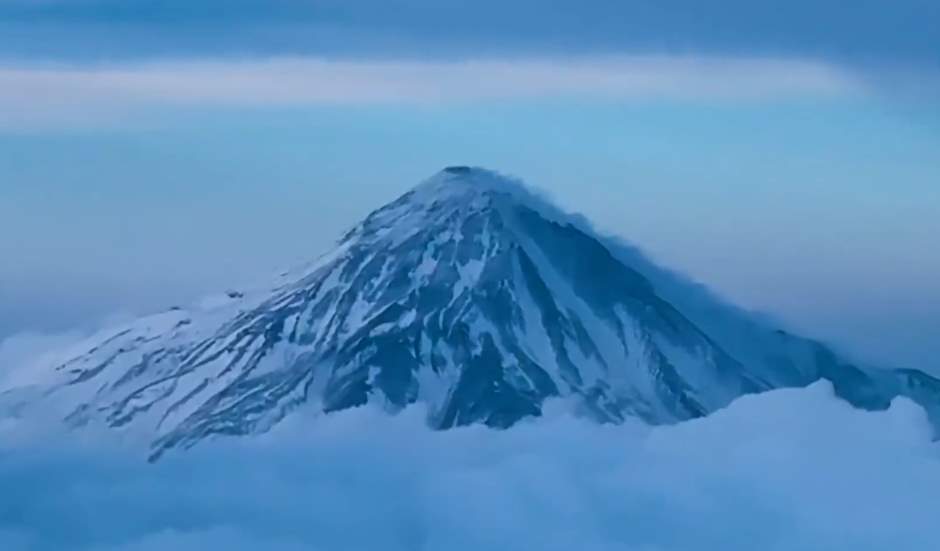
A Geological Marvel: The Sleeping Giant
Rising sharply from the Alborz Mountain range, northeast of Tehran, Damavand’s near-perfect conical silhouette is a masterclass in volcanic architecture. It is a stratovolcano—a mountain built from layers of hardened lava, tephra, and volcanic ash. While its last major eruption occurred approximately 7,300 years ago, it remains a “potentially active” volcano. Climbers who reach the final 300 meters of the ascent are often greeted by the pungent scent of sulfur. These active fumaroles near the summit crater are a vivid reminder of the geothermal energy still simmering below.
For the global mountaineering community, Damavand is a crown jewel. It is a member of the “Volcanic Seven Summits,” a challenge that involves summiting the highest volcano on each continent. With a topographic prominence of 4,667 meters, it ranks as the 12th most prominent peak in the world, making it a “must-climb” for those seeking the world’s most dramatic horizons.
The Sacred Peaks of Mythology
For Iranians, Damavand is more than rock and ice; it is a repository of the nation’s soul. In the Shahnameh (The Book of Kings) by the legendary poet Ferdowsi, the mountain serves as a cosmic prison. The tyrant King Zahhak, who had snakes growing from his shoulders, was defeated by the hero Fereydun and chained deep within the heart of Damavand. It is said that the volcanic tremors and the smoke from the summit are the echoes of Zahhak’s eternal struggle and rage.
Another deeply rooted legend is that of Arash the Archer. During a border dispute between Iran and Turan, Arash ascended Damavand to fire a magical arrow that would determine the country’s boundaries. He poured his entire soul into the bow, and the arrow flew for days before landing, marking the vast extent of the Persian lands. These stories transform the physical climb into a spiritual pilgrimage, where every step echoes with the footsteps of heroes and poets.
Climbing the Legend: Routes and Preparation
Mount Damavand offers sixteen different trekking routes, but four stand out as the primary paths to the sky.
- The Southern Route: The most popular and technically accessible path. It features the Polour Resort and the Bargah-e Sevom hut at 4,200 meters.
- The Northern Route: Known for its steepness and lack of shelter, this is a grueling test of endurance.
- The North-East Route: This is the longest path, passing through the beautiful Takht-e Fereydun shelter, offering spectacular views of the Yakhar Glacier.
- The Western Route: Famous for its stunning sunset views and the Simorgh shelter.
Success on Damavand requires more than just physical fitness; it requires respect for the altitude. The rapid elevation gain can lead to Acute Mountain Sickness (AMS). Acclimatization at camps like Gosfand Sara (3,040m) is crucial. The best time to visit is from mid-June to mid-September, when the “Scree Trails” (known as Shen-Ski) are manageable and the weather is most stable.
The Surrounding Wilderness
The mountain is the centerpiece of the Lar National Park, a protected area teeming with biodiversity. In late spring and early summer, the lower slopes are carpeted with the “Damavand Poppy” and other wildflowers. The region is also famous for its thermal hot springs, particularly in Larijan, where weary climbers can soak in mineral-rich waters that have been celebrated for their healing properties since ancient times.
Conclusion: A Witness to History
Whether viewed from the bustling streets of Tehran or the quiet shores of the Caspian Sea, Mount Damavand remains a symbol of resilience. It has witnessed the rise and fall of empires, the birth of legends, and the quiet determination of thousands of climbers. To stand on its summit, looking down at the 400-meter-wide frozen crater, is to stand at the intersection of history and nature. It is an experience that stays with you long after you have descended from the “Roof of Iran.”